




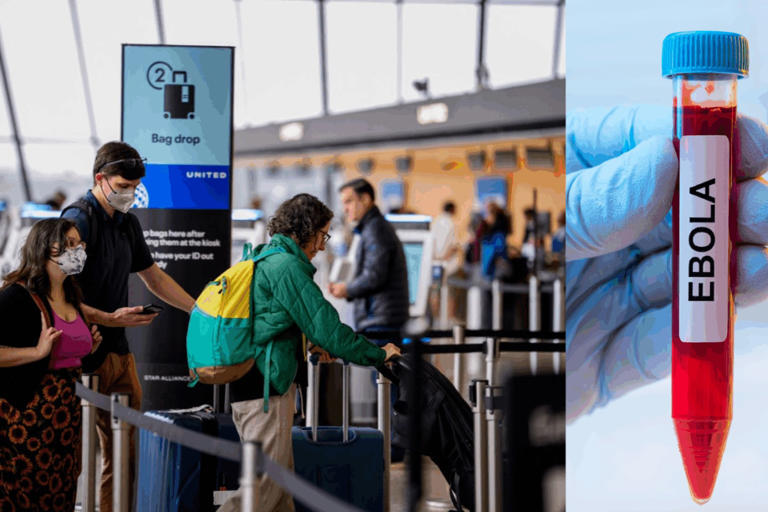
BENGALURU — A major health scare at Kempegowda International Airport has been successfully averted after a 28-year-old Ugandan national, who was placed under strict isolation over suspected Ebola-like symptoms, officially tested negative for the virus.
The diagnostic clearance was confirmed on Wednesday morning by the Union Ministry of Health and Family Welfare following an expedited molecular analysis conducted by the apex National Institute of Virology (NIV) in Pune.
Tracked via New DGCA Surveillance Protocols
The patient arrived in India from Uganda on Saturday, May 23, transiting through Ahmedabad before landing in Bengaluru. While the woman did not exhibit any immediate high-risk signs—such as an elevated temperature—during initial digital airport screening, health officials flagged her travel history.
Under standard operating procedures newly mandated by the DGCA following global health alerts, the District Surveillance Team monitored her location. Nearly 24 hours after checking into a local hotel, she reported a mild body ache and fatigue.
She was immediately transported via a specialized medical containment unit to the state-run Epidemic Diseases Hospital in Indiranagar, which has been designated as Karnataka’s primary quarantine and treatment facility.
Bengaluru District Surgeon and Medical Superintendent, Dr. Anil Kumar Banagar, clarified that the swift movement was purely precautionary:
“The patient has remained structurally stable throughout her stay and has not developed any secondary symptoms. While her first official NIV Pune report has returned negative, medical protocol requires us to conduct a repeat test after a 48-hour observation window. She will be safely discharged only after testing negative twice.”
Global Context: The WHO PHEIC Declaration
The localized health response follows an intensifying international tracking framework. On May 17, 2026, the World Health Organization (WHO) declared the active resurgence of the Bundibugyo Ebola strain across the Democratic Republic of Congo (DRC) and Uganda as a Public Health Emergency of International Concern (PHEIC).
In response, the Union Health Ministry has set up active health border controls across all primary international entry ports in India. Travelers returning from or transiting through Central and East African outbreak zones must mandatorily fill out self-declaration health logs and undergo mandatory self-observation for 21 days post-arrival.
Karnataka Solidifies Health Infrastructure
While assuring citizens that there is absolutely no cause for public panic, the Karnataka Health Department has fully activated its specialized Rapid Response Teams (RRTs).
Apart from the Indiranagar quarantine center, the Rajiv Gandhi Institute of Chest Diseases (RGICD) in Bengaluru has been retrofitted with state-of-the-art negative pressure isolation wards. Parallelly, in coastal Mangaluru, the Srinivas Port Hospital and Wenlock District Hospital have completed simulation drills to handle potential maritime screening containment.


